Stalk-eyed Fly
Diptera
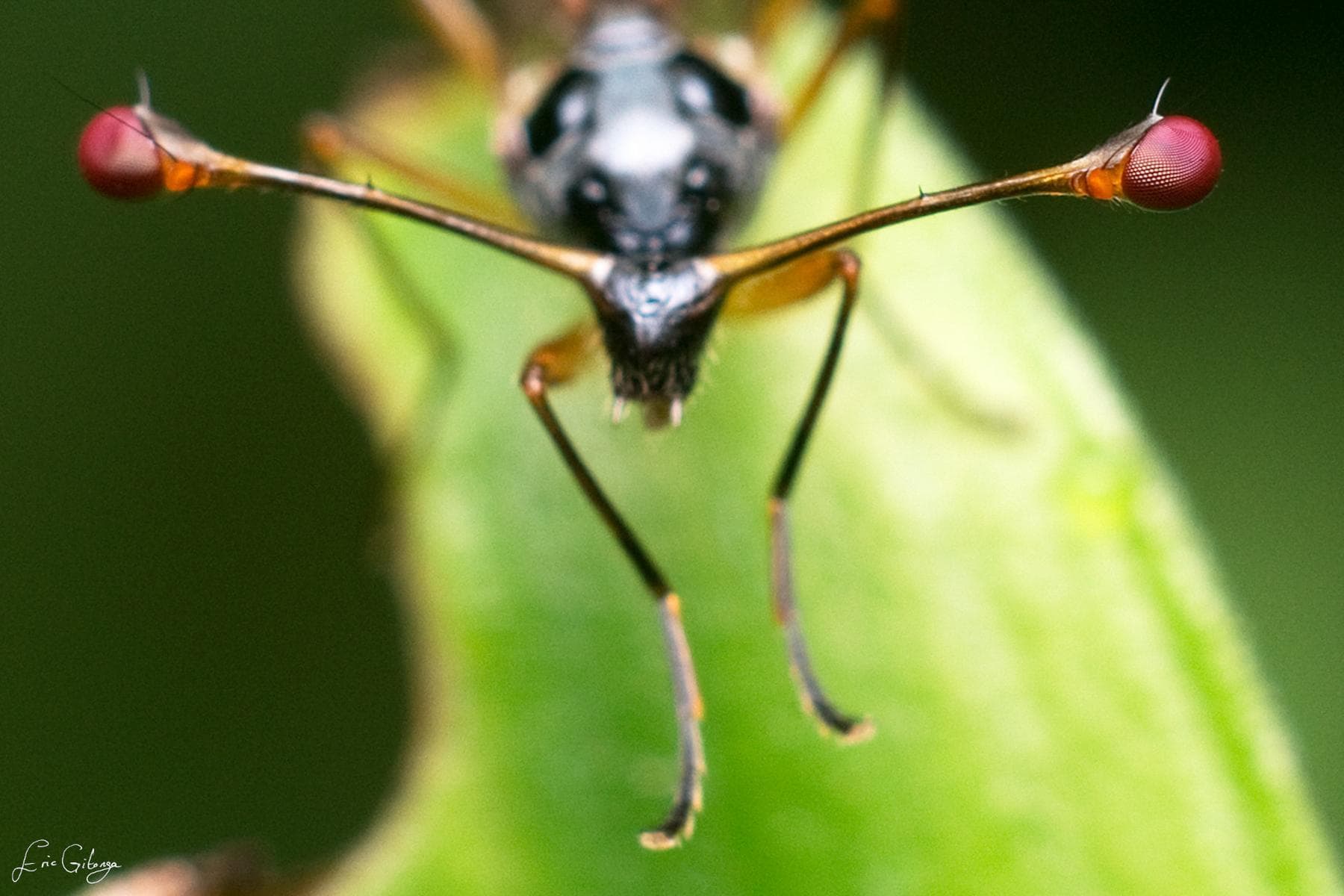
What Are They?
Imagine a fly whose eyes sit at the tips of two long rods sticking out sideways from its head — wider, in some species, than the fly's entire body is long. That's a stalk-eyed fly. They belong to the family Diopsidae, a group of around 240 known species worldwide, and Africa is their stronghold: about two-thirds of all described species live here, making a Kenyan encounter with one entirely at home.
What Do They Look Like?
The whole head plan is rearranged around those eyestalks — the eyes and antennae are pushed out to the very ends of diverging rods, rather than sitting flush on the head the way they do in almost every other fly. Not every member of the family goes this far, though: a stalkless subfaimly called the Centrioncinae, found in African montane forests including several Kenyan mountains, keeps its eyes in the ordinary place. Males usually grow noticeably longer eyestalks than females do. Those stalks aren't just decoration — males use them in stand-offs over prized resting spots, sizing each other up before deciding whether to fight, and both sexes appear to size up potential partners by eyestalk length too.
Where Do They Live?
Most stalk-eyed flies favour damp places — lake shores, riverbanks, and moist forest — where their larvae feed on rotting plant matter as decomposers. A smaller number of species have taken a different path and become stem-borers: their larvae tunnel into living rice plants instead, which is where the family crosses into farmers' lives. One such species, Diopsis longicornis, is documented across sub-Saharan Africa including Kenya and Tanzania.
Why Do They Matter?
The stem-boring species are a real headache for African rice growers. The larvae burrow down inside the stem toward the growing point, and their feeding dries out the central shoot — a symptom farmers call "dead-heart." Yield losses of 10–15% have been documented where these pests take hold. The good news is that researchers have found some clever, low-chemical ways to fight back. Certain rice varieties actually lure egg-laying females in, only for the variety's own toxicity to kill the larvae once they hatch — a trap crop that does the pest's own instincts against it. Other varieties give off scents that put egg-laying females off entirely. Tiny parasitic wasps that attack the fly's eggs and larvae add another natural line of defence, alongside the more familiar option of insecticide sprays.
Something Worth a Second Look
Most Diopsidae are quiet decomposers doing useful, unglamorous work breaking down rotting vegetation — it's only a handful of species that turn to farmers' crops. And scientists still haven't finished cataloguing them: roughly 65 African species with a distinctive wing marking are known to exist but have yet to be formally named and described, meaning a good deal of this family's diversity is still waiting to be written up.