Elegant Grasshopper
Orthoptera
What Is It?
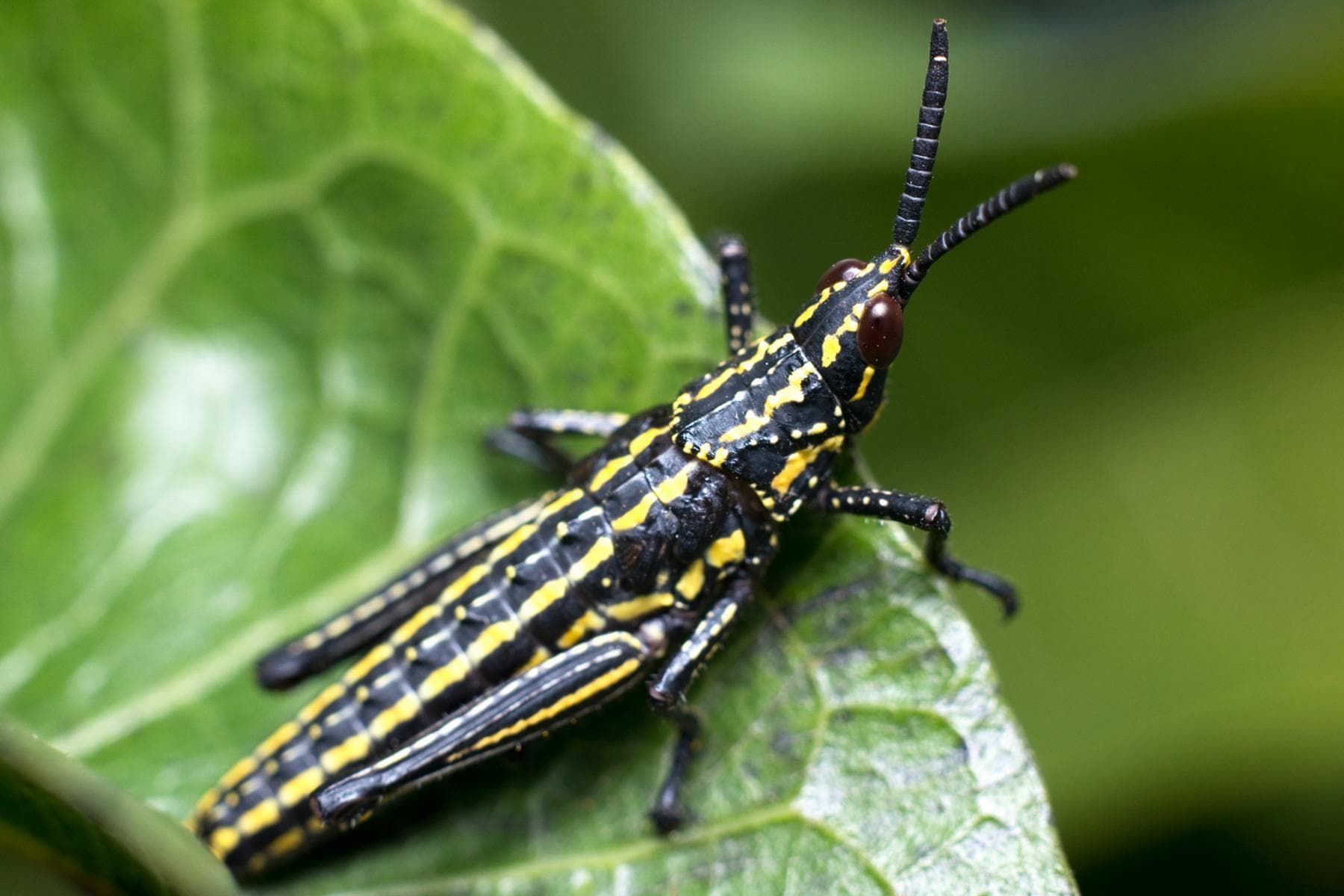
This bold black-and-yellow insect is a young "hopper" (nymph) of the Elegant Grasshopper, Zonocerus elegans — a common East African grasshopper found across Kenya's savannahs, gardens, and farmland. Despite the name confusion with a similar-looking West African cousin (Zonocerus variegatus), records confirm that any black-and-yellow Zonocerus nymph spotted in Kenya is this species, not its western relative.
What Does It Look Like?
Young nymphs like the one photographed are strikingly patterned in black with bold white or yellow spots and bands — a "don't eat me" warning outfit rather than camouflage. As they grow into adults, the colours shift toward a richer mix of yellow, olive, dull red, orange, and black, with orange-red eyes and antennae ringed in black and orange. Most adults keep short wings their whole lives — even the rare individuals with full-length wings are clumsy fliers, so this grasshopper gets around mostly by walking and hopping rather than flying.
How Does It Grow Up?
Females lay batches of 20 to over 100 eggs in pods in the soil, timed around the rains. The eggs then wait — sometimes for six to nine months — before hatching. Young nymphs hatch out in large groups and stick together, clustering conspicuously at the tips of low plants. This "safety in numbers" habit, combined with their loud warning colours, helps deter predators. Adults are more likely to go it alone.
Why Is It Black and Yellow?
Those colours are advertising, not decoration. This grasshopper (and its West African relative in particular) can produce a foul-smelling defensive fluid from glands on its body, and its bold pattern warns predators to expect an unpleasant surprise if they attack. Some Zonocerus grasshoppers go a step further: they deliberately seek out and eat plants containing toxic chemicals (pyrrolizidine alkaloids), storing the toxins in their own bodies as an extra layer of chemical defence — essentially building their own poison from what they eat.
What Does It Eat?
This species is a food generalist, feeding on a huge range of plants — onions, amaranth, citrus, coffee, cassava, sweet potato, banana, tobacco, and many more. It thrives in open savannah country and avoids thick forest or true desert.
Why Does It Matter?
Zonocerus grasshoppers can be a real headache for farmers — the West African relative has been blamed for cassava losses of up to half a crop in bad years, and this East African species is likewise known to nibble away at cassava yields. On the flip side, in parts of South Africa these grasshoppers are also eaten as a nutritious, protein-rich snack. Where control is needed, researchers have developed a natural fungal spray that specifically targets grasshoppers like this one, killing most of a treated population within two to three weeks without harming other wildlife.