Conehead Katydid
Orthoptera
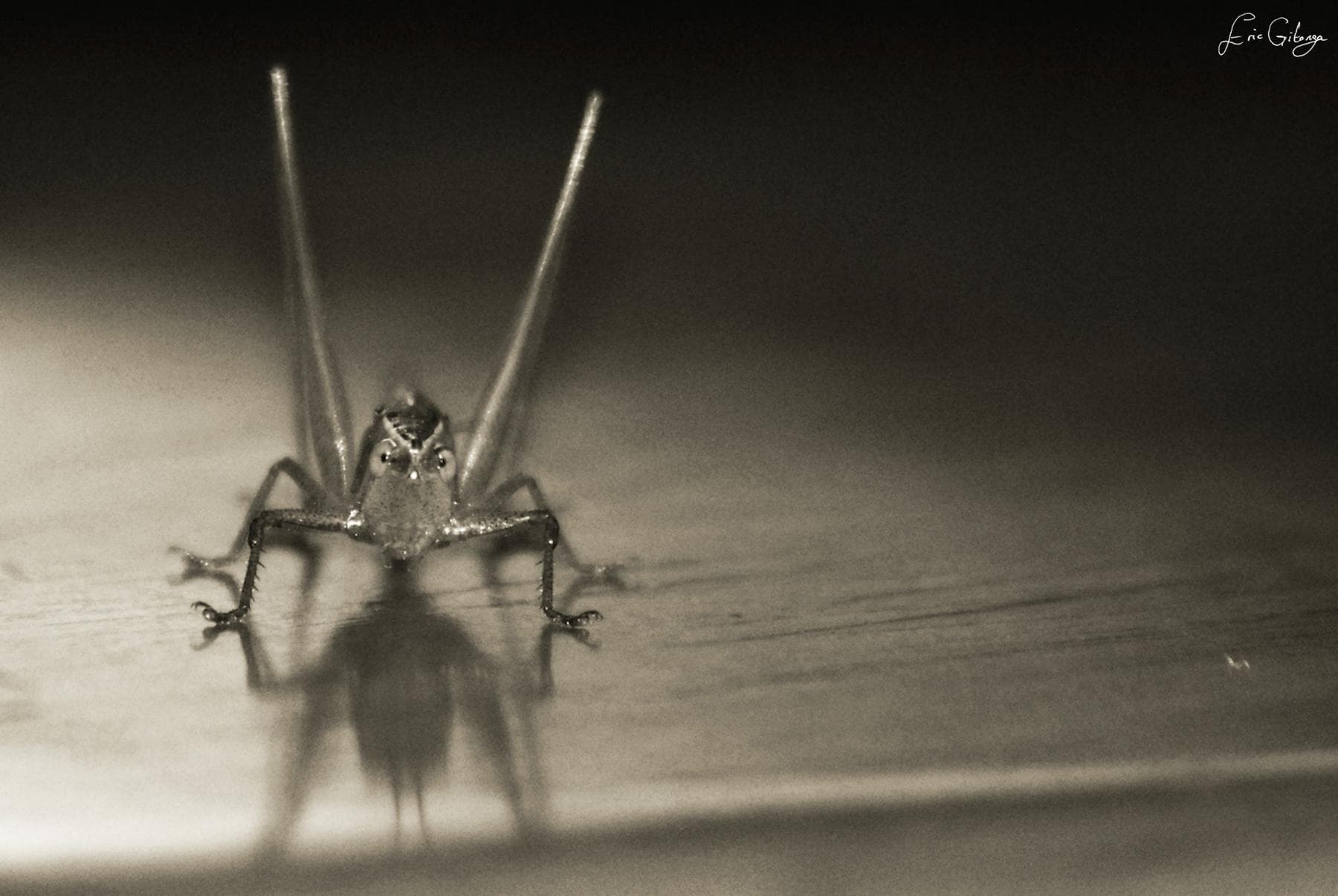
What Are They?
Meet the conehead katydid — a wedge-headed grasshopper relative that's one of the most important edible insects in East Africa. In Kenya it's part of the "senene" harvest, a katydid so valued as food that entire seasonal trades are built around catching it. Its scientific name, Ruspolia differens, ties it to a whole family of "conehead" katydids found around the world — but confusingly, the American coneheads you might read about online belong to completely different, unrelated genera. The one in this photo is the Old World, African branch of the conehead family tree.
What Do They Look Like?
The name "conehead" comes from the sharply pointed, wedge-shaped head visible even in a nymph like this one — you can see it clearly in the photo, along with the huge eyes and the long, whip-thin antennae held apart in a wide V. Adults grow to about 5–6 cm long, with wings that stretch past the back legs. They come in a surprising range of colours — green, brown, and striped or blushed versions of both — and males and females look a little different from each other: males are smaller and carry a pair of odd little flap-like structures on the underside of their bodies, while females carry a long, needle-like egg-laying tube called an ovipositor.
How Do They Live?
From egg to adult takes about five months. Eggs get tucked into damp grass sheaths or maize shoots, and hatch in two to three weeks depending on how wet things are. The nymphs then moult their way through several stages — six for males, seven for females — before becoming adults, feeding mostly on grass flower heads rather than leaves or stems. Twice a year, something remarkable happens: the population swarms, taking to the air in huge, astonishingly predictable mass flights, usually around April–May and again around November–December. Orthopterists consider this level of predictable, synchronized swarming unusual among grasshoppers and katydids generally.
Why Do They Matter?
This is where the conehead katydid really stands out — it's food. Across more than twenty African countries, people harvest it as a protein-rich delicacy, and in parts of Kenya, Uganda, and Tanzania around Lake Victoria, it's a genuine cash crop, fetching prices comparable to beef or chicken. Nutritionally, it holds up well too: it can be well over half protein by weight, rich in healthy fats, and packed with minerals. But there's a catch — some market samples have also tested positive for concerning bacteria and heavy metals, so how it's harvested, stored, and cooked really matters for safety. Deep-frying, the traditional preparation method, does a good job of cutting down the bacterial load.
How Are They Caught?
Because they're strongly drawn to light at night, harvesters set up bright lamps — traditionally mercury-vapour bulbs — over oil-coated drums during the swarming seasons. The insects fly in, get disoriented, and drop straight into the collection container. A single good night at one of these traps can bring in the equivalent of eight to ten 100-kilogram sacks — a serious harvest from a creature barely a couple of inches long.
One Persistent Problem
Given how valuable this insect is, you'd think farming it in captivity would have been solved long ago — but adult conehead katydids have a habit of eating each other when crowded together, and this cannibalism remains one of the biggest unsolved obstacles to scaling up commercial rearing. Researchers have found that giving them live prey, like fly larvae, cuts down on the cannibalism significantly — but for now, most of the harvest still comes from the wild swarms rather than a farm.