Armoured Katydid
Acanthoplus discoidalis
Tettigoniidae · Orthoptera
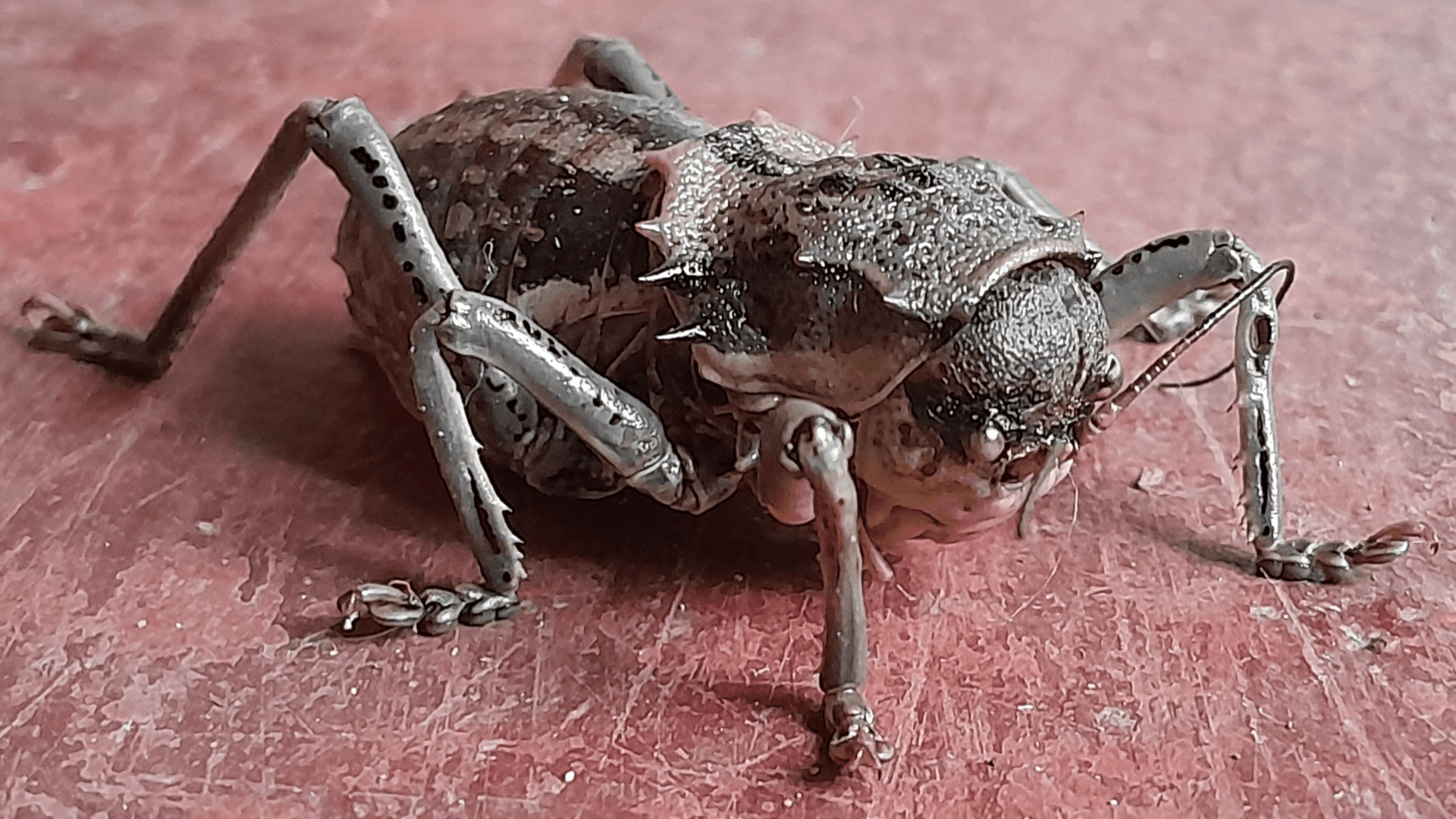
What Is It?
The armoured katydid (Acanthoplus discoidalis, per the online-sourced report) is a heavy, spiny, flightless cricket relative from the grasslands of southern Africa, known as koringkriek ('corn cricket') in Afrikaans and Setotojane to farmers in the region. It sits in a small African branch, Hetrodinae, within the katydid family Tettigoniidae. Its most dramatic trait is a deliberate defence: when attacked, it can squirt its own blood at the threat.
What Do They Look Like?
Adults are about 5 centimetres long, wide-bodied and heavy for an insect, colored brown, green, black, or reddish, with a hard, spiky exoskeleton and a shield-like plate (pronotum) over the back that gives the species its 'armoured' name. It is flightless, probably never travelling more than a few kilometres in its life, has powerful jaws capable of a painful nip, and its large body mass means it must actively shuffle around bushes to manage its temperature.
A Family Tree Surprise
A DNA-based study using specimens from Namibia, Zambia, and South Africa found this African group to be a true single branch (monophyletic) on the katydid family tree. Its closest relative is another African shieldback katydid group, so close that it's a live open question whether that group should be folded into the armoured katydid's own branch.
How Do They Live?
Females bury egg pods of 6 to 12 eggs a couple of centimetres into soil, preferring dry, loose soil under Acacia trees over crop fields; roughly half of all eggs laid are eaten by underground ants, and an egg can wait 8 to 12 months before hatching. Hatchlings are miniature wingless versions of adults that take two to three months to grow up, and adults are opportunistic omnivores eating grass and cereal heads as well as scavenged carrion, other insects, or bird nestlings. Males transfer a nutritious mating gift weighing up to a fifth of their body weight, which the female eats; a female can store sperm to lay multiple egg batches without remating.
Why Does It Bleed on Purpose?
When grabbed, the cricket can rupture seams in its leg joints and squirt foul-smelling, distasteful blood (hemolymph) at a threat, sometimes several centimetres; about six in ten leg-attacks triggered this in lab tests, and the blood put off reptile predators in feeding trials. It may also bite, spit up stomach contents, or (males only) buzz a rasping alarm sound, layering several defences at once.
Is It a Pest?
The two underlying reports disagree on how confirmed this is: book-sourced literature says it has only a folk reputation as a cornfield pest in southern Africa, with no book directly documenting the connection. Online-sourced field research states it definitively, calling it the single worst pest of grain crops in northern Namibia and the second-worst in eastern Botswana, with outbreaks wiping out 30-40% of a region's sorghum or millet harvest. Outbreaks are local population explosions rather than migrating swarms, since the insect is flightless.
How Do Farmers Fight Back?
A baited trench — a ditch dug around a field with insecticide mixed into cereal bran — killed over 90% of crickets crossing it within a day, far better than an unbaited trench, and a modified animal-drawn plough cutting a steep furrow blocked about 30% of crickets unaided. This targeted, edge-only approach was gentler on other insect life than broadcast spraying, which caused lasting damage across almost every insect group checked.
Would You Eat It?
Katydids and relatives are eaten across Africa generally (insect protein converts feed far more efficiently than livestock), and with growing interest in insects as protein, researchers have begun looking at these crickets as a food source for animals and people — though farmers reportedly had to wash them carefully first since chickens sometimes refused to eat them with their defensive chemicals still on.
Notable Facts
Chemicals released by ripening sorghum that attract this cricket belong to the same class desert locusts use to trigger swarming — a coincidence between two very different pests. Locally the cricket is enough of a well-known character that a farmer-outreach program built around fighting it had its own theme songs, poems, and a dedicated festival day.